
Belonging is not the educator's burden.
It's the system's responsibility.
STAYk12 (Supporting Teachers All Yearlong in K-12 Schools) builds the relational and structural conditions that let educators — especially those whose identities aren't reflected in a school's default assumptions — stay, thrive, and lead.

Practitioner-Scholar. Educator. Former Engineer. Ed.D.I spent 20+ years in California classrooms before I went looking for the gap.
Belonging for educators who reflect their communities is rarely built by accident. It takes relationships, leadership, and policy working together; not any single strategy, and not good intentions alone.
I studied that gap directly in my doctoral research at USC Rossier, through in-depth interviews with the immigrant teachers living it. What I found: Belonging isn't a credential a teacher earns. It's a condition schools are responsible for creating, and when schools don't create it, teachers leave, and students lose.
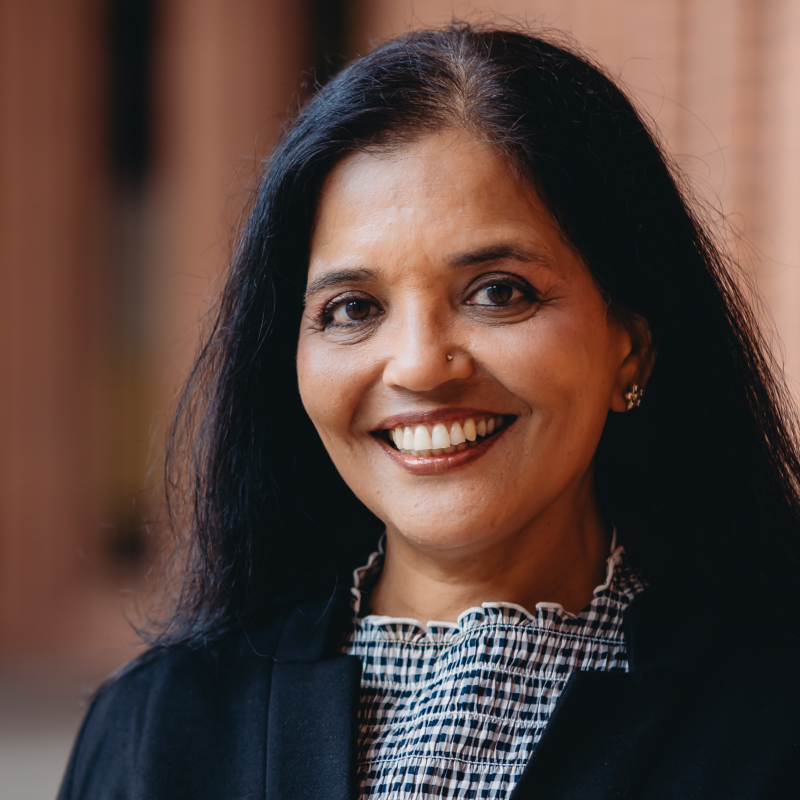
Sridaya Mandyam-Komar, Ed.D.At USC Rossier, I founded GEMS@Rossier (Global Educators for Mutual Support), a peer support network connecting foreign-born and U.S.-born educators, a space I wished I'd had myself when I was navigating new systems and searching for belonging. It grew from a small personal initiative into a broader community built on the same principle everything else here rests on: we thrive when we support one another.
Through STAYk12, I work at the intersection of educational psychology, organizational culture, and workforce equity, studying these questions alongside school leaders, labor/immigration coalitions, county offices, and thinktanks, and building tools and pilots with them, not for them.
Practitioner-Scholar. Educator. Former Engineer. Ed.D.The Research Behind STAYk12
This isn't a framework built on instinct. It's built on doctoral research, direct interviews with the immigrant teachers living this gap, and workforce data that shows why the gap matters.

More than a quarter of U.S. students under 18 live with at least one foreign-born parent, yet immigrant teachers make up only about 7% of the TK–12 workforce.

Replacing a single teacher costs a district somewhere between $17,000 and $30,000. Some districts put the true figure closer to $50,000 once administrative time is included.

Belonging is not a soft outcome; it functions as a measurable, trackable retention lever when districts build structures for it deliberately.
What I Build With Partners
Five ways districts, counties, and labor coalitions work with STAYk12: From research to pilot to program.
-
We listen, map your objectives, and outline quick wins you can act on today. Expect clear answers and a friendly guide the entire way.
-
Induction and mentorship designed not just based on compliance, but also to help retain new teachers in the profession.
-
Induction and mentorship designed not just based on compliance, but also to help retain international teachers who are in the U.S. on cultural exchange visas.
-
Embedded equity research for EdTech—partnering with product teams and investors to evaluate how design impacts marginalized learners and educators, then translating those findings straight into roadmap-ready design inputs.
-
Classroom-native math and engineering pathways for underserved students, forged through 20 years of practice. Translates real-world ecosystem connections and ground-level pedagogical insight into co-implemented, equity-centered STEM architecture.
01 Educator Belonging & Retention AuditFind out what's actually driving turnover — before it costs you another teacher.
Co-investigated audit, not a consultant's survey.
• Confidential belonging measurement
• Qualitative metrics
• Aggregate-only reporting
• Actionable recommendations
WHO THIS IS FOR:
District HR and equity leaders, county offices, labor coalitions02 Relational Induction & Mentorship DesignInduction that asks who a new teacher is, not just what they can document.
Mentoring and onboarding built around the 2024 California Standards for the Teaching Profession (CSTPs).
• Year-long program with four Belonging Circles
• Session Companion materials
• Backgrounds as assets, not deficits
• 2024 CSTP alignments
WHO THIS IS FOR:
New teachers, mentors, site administrators03 Relational Induction & Mentorship DesignThe relational infrastructure international educators need, designed with them, not just about them.
For the population most districts have no structured support system for.
• Yearlong cohort model
• Neutral facilitated space
• Aggregate-only reporting
• Executive-level reporting
WHO THIS IS FOR:
J-1 educators, HR teams, district leaders04 EdTech Equity CollaborationDoes this tool close gaps or quietly create new ones?
Studying how product design affects educators and learners.
• Research collaborations with edtech teams
• Equity-focused evaluation
• Findings as design input
WHO THIS IS FOR:
EdTech companies, product teams, investors
05 STEM Pathway Development
Math and engineering pathways built from the classroom up.
Grounded in 20 years of classroom practice with at-promise, underserved students.
• Pathway design for underserved populations
• Practice-grounded recommendations
• Real-life ecosystem connections
• Collaborative implementation
WHO THIS IS FOR:
Districts building STEM pathways, STEM program leads
Get in touchLet's connect.
I build one relationship at a time, with leaders who want to study these problems honestly and build the answer together. If that's you, let's talk.